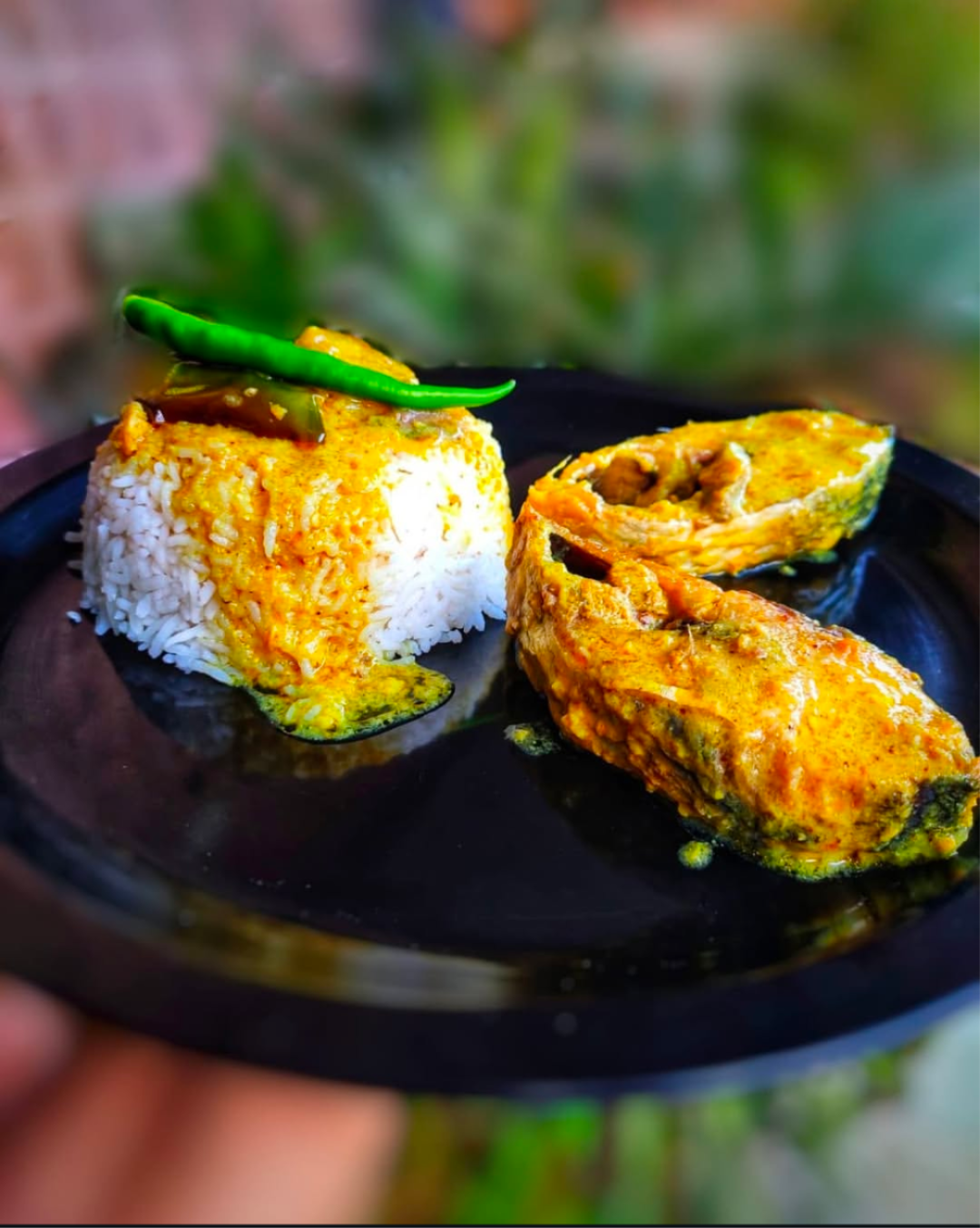

Chingri Malai Curry
Tiger prawns in full-fat milk gravy — the recipe that converted a non-fish eater
Let me tell you something about my husband. The man does not eat fish. Not hilsa, not rohu, not bhetki — nothing. In nearly twenty years together, I have never once managed to get a single piece of fish past him. He is polite about it, but firm. Fish is simply not for him. And then one evening, I made this Chingri Malai Curry. He tried it — reluctantly, I should add — and went back for seconds. Then thirds. I did not say a word. I just smiled and made a mental note to cook it again very soon.
My sister, on the other hand, has always been my most enthusiastic audience in the kitchen. She is the one who calls me after every new recipe, the one who requests dishes by name, the one who will travel nearly 1,600 kilometres — from one state to another — just to sit at my table. Chingri Malai Curry is her absolute favourite. She has told me, more than once, that this is the dish she would want at her last meal. High praise, and I do not take it lightly.
Now, I should be honest with you. My version of this recipe is not traditional. I do not use turmeric — I find it muddies the colour and the flavour of the prawns. I do not use water — not a single drop. And while I respect coconut milk, I personally find it too sweet, too one-dimensional for what I am trying to achieve here. Instead, I cook the entire gravy in full-fat milk. The result is a richness that is quieter, more nuanced, and — I would argue — far more elegant.
The fat base is a 50:50 blend of mustard oil and ghee. The mustard oil brings its characteristic sharpness and depth. The ghee brings richness, aroma, and a depth of taste that mustard oil alone simply cannot provide. Together, they create something neither could achieve alone.
This is a high-complexity dish. I will not pretend otherwise. It demands your attention, your patience, and your respect. But I will also tell you this — it is completely foolproof. Follow every step, do not rush, and I promise you there is no way anyone at your table will not love it.
Ingredients
The Prawns
- 600g large tiger prawns, shelled and deveined (heads on if possible)
- 1 tsp salt
The Fat Base
- 2 tbsp mustard oil
- 2 tbsp ghee
- 2 tbsp ghee (reserved — to finish)
The Aromatics
- 1 large onion, thinly sliced
- 1½ tsp ginger paste
- 1 tsp garlic paste
- 4–5 green chillies, slit
Whole Spices
- 3 green cardamoms
- 1 bay leaf
- 1 small cinnamon stick
- 3 cloves
The Gravy
- 500ml full-fat milk (room temperature — never cold)
- 1 tsp sugar
- Coconut milk — optional, 100ml if you prefer (I never use it)
To Finish
- ½ tsp garam masala powder
- 2 tbsp ghee
- A few fresh green chillies
Method
- 1
Marinate and Fry the Prawns First
Season the prawns with salt only — no turmeric, nothing else. I do not use turmeric in this recipe at all. It stains the gravy yellow and competes with the delicate sweetness of the prawns. Let them rest for 10 minutes. Then heat the mustard oil and ghee together in a wide, heavy-bottomed pan over high heat. When the fat is hot, fry the prawns for no more than 60–90 seconds per side — just until they turn pink and get a light sear on the outside. Remove them immediately and set aside. They are not cooked through yet. They will finish in the gravy later. Overcooked prawns are rubbery and sad, and I will not be responsible for that.
- 2
Build Your Fat Base
In the same pan with the remaining fat, reduce the heat to medium. This 50:50 blend of mustard oil and ghee is the soul of this dish. The mustard oil gives it character — that unmistakable Bengali sharpness and depth. The ghee brings richness, a beautiful aroma, and a depth of taste that mustard oil alone simply cannot provide. Together, they create something neither could achieve alone.
- 3
Wake Up the Whole Spices
Add the cardamoms, bay leaf, cinnamon, and cloves to the fat. Let them sizzle gently for about 45 seconds. You are not frying them aggressively — you are coaxing their fragrance into the oil. The kitchen should smell extraordinary at this point. If it does not, your heat is too low.
- 4
The Onion — Patience is Non-Negotiable
Add the thinly sliced onion. Cook on medium-low heat, stirring frequently, for a full 12–15 minutes. The onion must turn a deep, even golden — not brown, not pale. Thinly sliced onion caramelises beautifully and melts into the gravy, giving it body and sweetness without any harsh raw bite. This is where most people lose patience and rush. Do not. The entire flavour of the gravy depends on this step being done properly.
- 5
Ginger, Garlic, and Green Chillies
Add the ginger paste, garlic paste, and slit green chillies. Cook for another 3–4 minutes, stirring constantly, until the raw smell disappears completely. The masala should look glossy and begin to pull away from the sides of the pan. That is your signal to move forward.
- 6
The Milk Gravy — No Water, Ever
Reduce the heat to the lowest setting. Pour in the full-fat milk slowly — all 500ml of it — stirring as you go. The milk must be at room temperature, never cold. Cold milk will split. We use 500ml because a good portion will evaporate as the gravy cooks and reduces — this is not excess, this is intention. No water goes into this dish. Not a drop. The milk is your only liquid, and it creates a gravy that is rich, slightly sweet, and beautifully pale. If you choose to add coconut milk, replace 100ml of the milk with it — but I never do. Add the sugar now. Stir gently to combine everything.
- 7
The Long, Patient Simmer
Cover the pan and cook on the lowest possible heat for 15–18 minutes. Stir every 4–5 minutes, gently. The milk will slowly reduce and thicken, absorbing all the spice and fat into a glossy, clinging gravy. Do not boil it. A boil will break the milk and ruin the texture. Low and slow is the only way.
- 8
Add the Prawns Back
Once the gravy has reduced and thickened beautifully, slide the seared prawns back into the pan. Stir gently to coat them in the gravy. Cook on low heat for 4–5 minutes — just enough to heat them through and let them absorb the flavours. Do not overcook. The prawns should be tender, juicy, and perfectly coated.
- 9
The Finishing Touch — Ghee and Garam Masala
Turn off the heat. Immediately add the reserved 2 tablespoons of ghee and the garam masala powder. Stir once, gently. Cover the pan and let it rest for 5 minutes. This final ghee is not optional — it adds a richness, a fragrance, and a depth of taste that lifts the entire dish. Those five minutes of resting allow every flavour to settle and come together beautifully.
How I Love to Serve It
Serve with fragrant basmati rice — nothing else. The gravy is the star and it deserves a clean, simple canvas. My sister always asks for extra gravy on the side. I always make sure there is some. If you are serving someone who claims they do not like prawns, serve them this anyway. My husband is living proof that this recipe changes minds.
From My Kitchen to Yours
I have made this dish for family lunches, dinner parties, and quiet evenings at home. It has never once failed me. Not once. The technique is demanding — the patience required for the onion, the care with the milk, the restraint with the prawns — but every single step has a reason. Follow them, trust the process, and what comes out of that pan will be one of the most beautiful things you have ever cooked. My sister calls it the best prawn dish she has ever eaten. My husband — the man who does not eat fish — asks for it by name now. That, to me, is the only review that matters.