
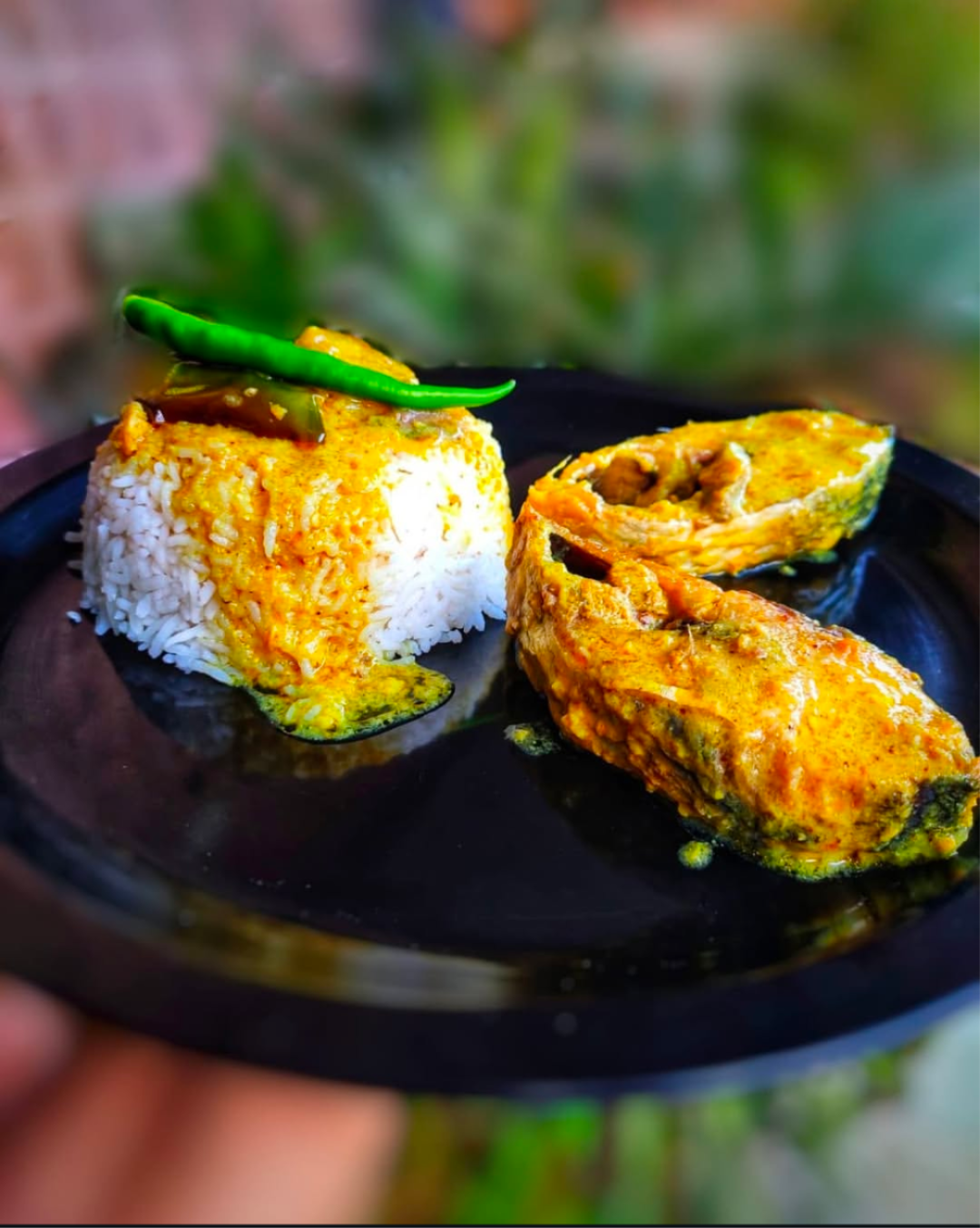
Sorshe Ilish
The taste of a Bengali monsoon — mustard, hilsa, and memory on a plate
If there is one dish that can instantly transport me back to my childhood, it is Sorshe Ilish. Growing up in a Bengali household, the arrival of fresh hilsa was nothing short of an event. I still remember watching my mother unwrap the fish from sheets of newspaper, the kitchen already buzzing with anticipation. The sharp aroma of mustard oil would soon fill the house, and somehow everyone knew that lunch was going to be special. Outside, the monsoon clouds would gather. Inside, a pot of Sorshe Ilish would quietly simmer on the stove.
To me, this dish is much more than a recipe. It is the taste of family, nostalgia, and countless Sunday afternoons spent around the dining table.
Today, I am sharing my version of this timeless Bengali classic.
Ingredients
- 6 pieces fresh hilsa (ilish) fish
- 3 tbsp yellow mustard seeds
- 1 tbsp black mustard seeds
- 4–5 green chillies
- ½ tsp turmeric powder
- Salt to taste
- 4 tbsp mustard oil
- ½ cup warm water
Method
- 1
The Soul of the Dish — the mustard paste
Soak the yellow and black mustard seeds in warm water for about 15 minutes. Grind them with a couple of green chillies and a pinch of salt until smooth and creamy. My mother always insisted that mustard should never be rushed. A properly ground paste creates a silky gravy, while a coarse one can leave an unpleasant bitterness behind. Some kitchen lessons stay with you forever.
- 2
Preparing the Ilish
Wash the fish gently and marinate it with salt and turmeric. Allow it to rest for about 10 minutes while you prepare the gravy. Meanwhile, heat mustard oil until it reaches its smoking point. Reduce the heat and let it cool slightly. That unmistakable fragrance rising from the pan is one of the most comforting smells in a Bengali kitchen.
- 3
Where the Magic Happens
Add the mustard paste to the oil and cook gently for a minute. Do not let the mustard fry aggressively — it should soften and bloom rather than brown. Pour in the warm water and season with salt. Add a few slit green chillies and bring everything to a gentle simmer.
- 4
Leave it alone
Carefully place the hilsa pieces into the gravy. Cover the pan and let them cook slowly for 8–10 minutes. No vigorous stirring. No unnecessary fuss. Hilsa is delicate, and the best thing you can do is leave it alone. As the fish cooks, its natural oils mingle with the mustard gravy, creating the rich golden sauce that makes this dish so irresistible.
- 5
The Final Touch
Just before turning off the heat, drizzle a teaspoon of raw mustard oil over the curry. Add a couple more green chillies. Cover the pan and let the curry rest for five minutes. Those five minutes allow all the flavours to settle and come together beautifully.
How I Love to Serve It
A plate of steaming white rice. A generous spoonful of mustard gravy. A perfectly cooked piece of ilish. Nothing else is really needed. Some meals demand elaborate accompaniments — Sorshe Ilish is not one of them. It shines brightest when allowed to speak for itself.
From My Kitchen to Yours
Every Bengali family has its own Sorshe Ilish recipe. Some add yogurt, some use only yellow mustard, and some make it fiery with green chillies. This version is the one that reminds me most of home — the one that brings back rainy afternoons, crowded family lunches, and conversations that lingered long after the plates had been cleared. And perhaps that is the true magic of Sorshe Ilish. It is not just food. It is a memory served with rice.
